
Parent-child accounts
Hierarchical customer accounts that share contracts or invoices
In many FinTech businesses and other industries, it is common to have a billing entity representing a customer with multiple subsidiaries or locations. This structure is known as a parent-child account hierarchy.
Premium Add-onPlease contact our commercial team if you are interested in using this functionality.
Types of parent-child billing in Solvimon
1. Default billing
Child subscriptions generate invoices at the parent level without individual child splits.
2. Forward billing
Issue a unified invoice to the parent entity for usage across multiple child entities.
3. Subscription Combining
Combine subscriptions from multiple child entities into a single invoice for the parent entity

Processing-only customers
In this scenario, the parent customer has a contract with your business and is also the beneficiary of the invoice. The usage, however, comes from the child customers that are linked to the parent. These customers are marked as 'Processing' customers that cannot have their own subscription but can have usage and usage insights.
The usage is ingested to the child-customer level and copied over to the parent contract for pricing and invoicing purposes.
Processing-only customers cannot
- Have their own subscription
- Be a parent
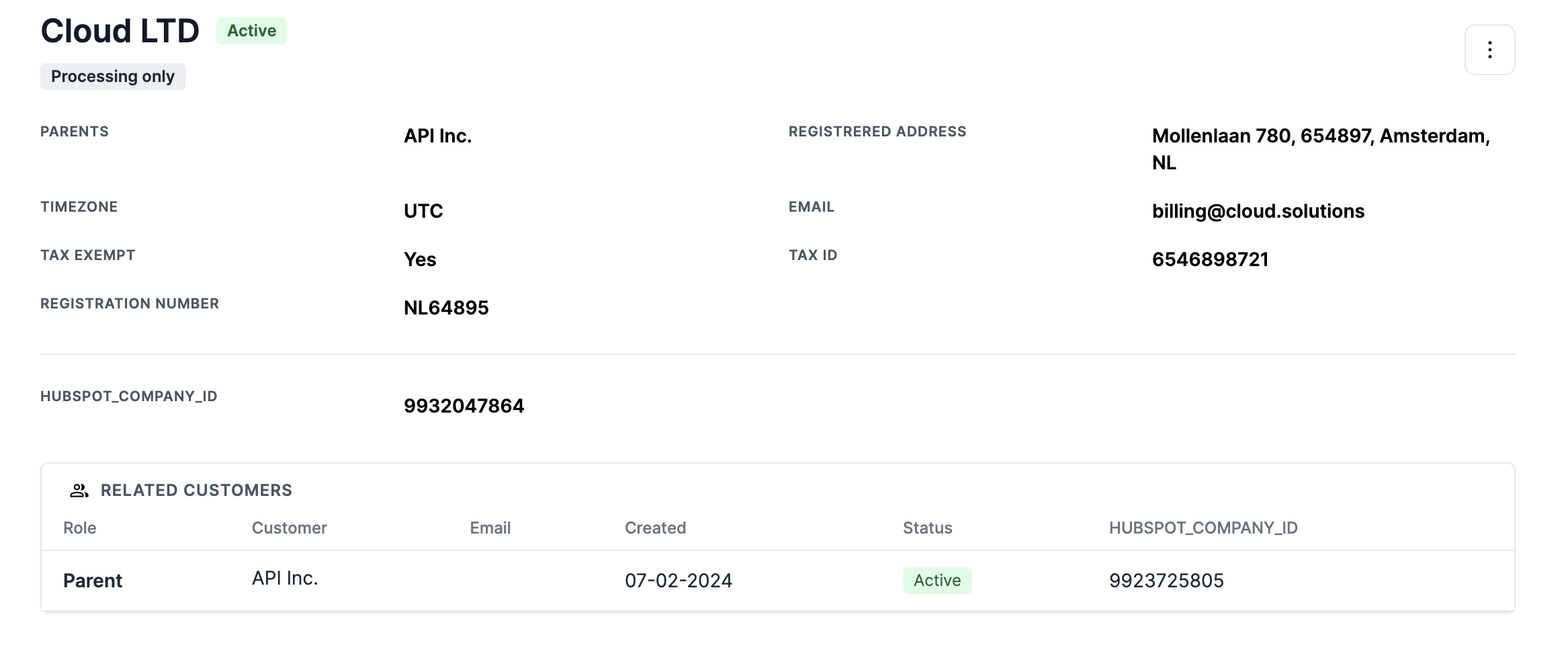
A processing customer's detail page does not show subscriptions nor invoices
Forward billing
In a forward billing setup, multiple child customers each maintain their own individual subscriptions and volumes. These are then aggregated and billed to a single parent customer. The parent_customer_id is configured on the child customer accounts to facilitate this process
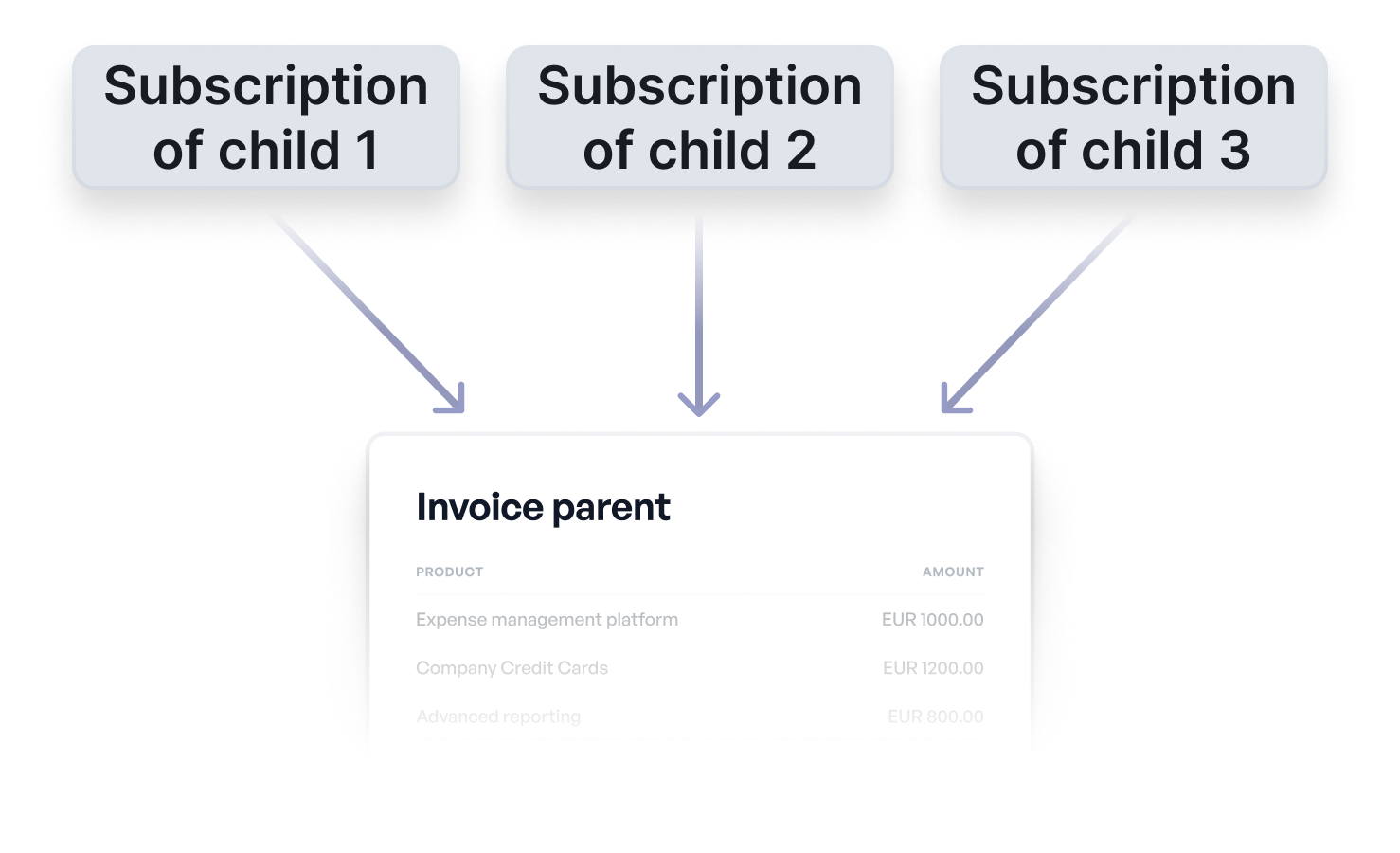
Invoicing in forward billing
When subscriptions are created, if the variant is selected as forward billing and the option for allow combining subscriptions is set to yes in the subscription settings, the usage and volumes can be forwarded to the parent customer.
This means that if multiple invoices share the same terms (e.g., billing entity, currency, billing time, and billing period), the invoice lines will be combined. For example, if three subscriptions have the same billing terms and schedule (e.g., billed on the first of every month), and the subscriptions are set to combine, a single invoice will be received by the parent. This invoice will include the combined charges for all three subscriptions.
Additionally, if there is another child customer, the new child customer can simply be added to the parent’s own subscription for billing purposes. This ensures that the charges for the new child customer are seamlessly billed to the parent
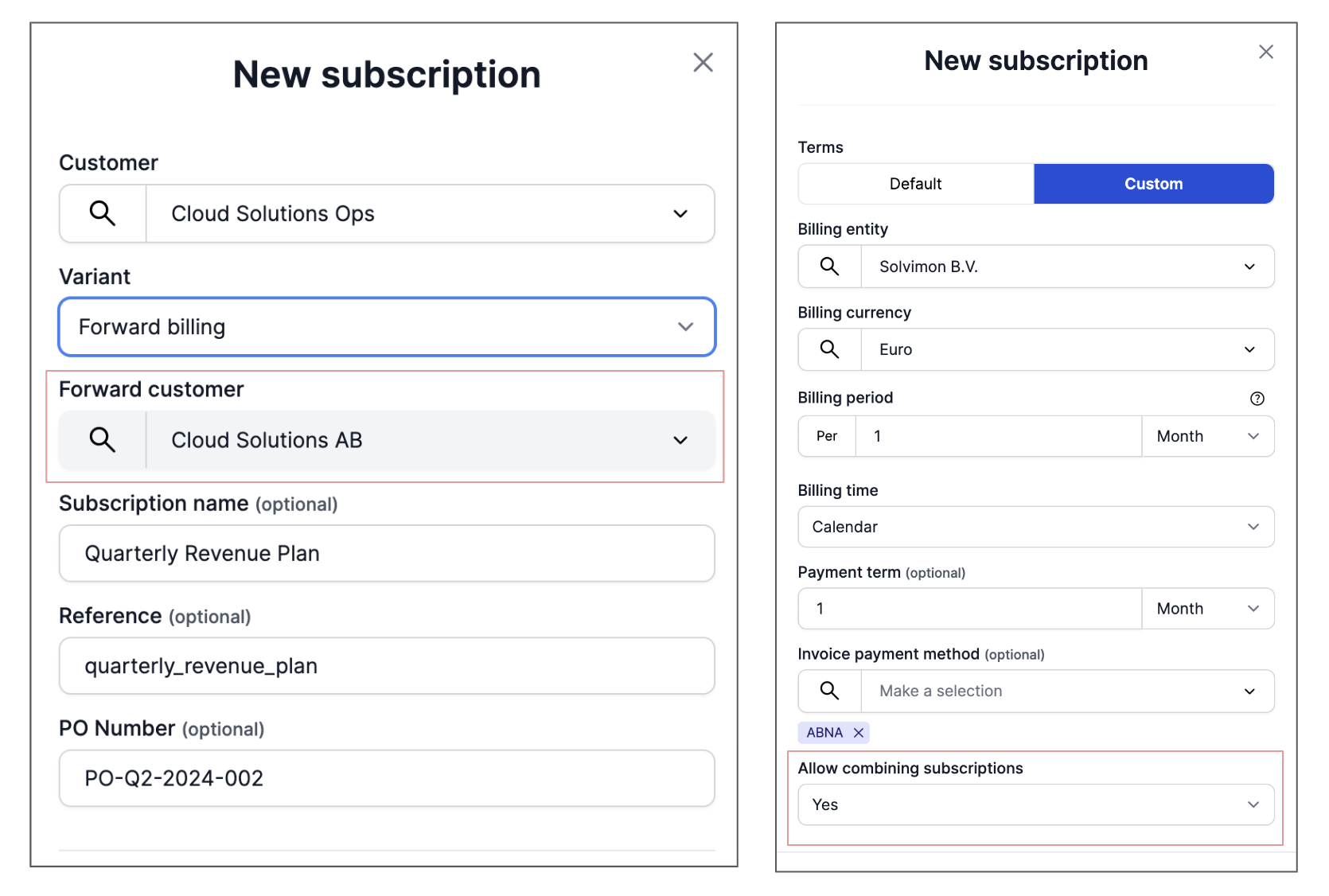
In a new subscription creation form, select variant and subscription terms
Default billing
In this setup, multiple child customers are linked to a single parent customer. Each child maintains its own subscription and volume data.
For streamlined billing, child customers are treated as a single entity. The parent customer receives a consolidated invoice covering all child subscriptions.
Subscriptions for the parent customer aggregate volumes from all children, simplifying invoicing and financial management
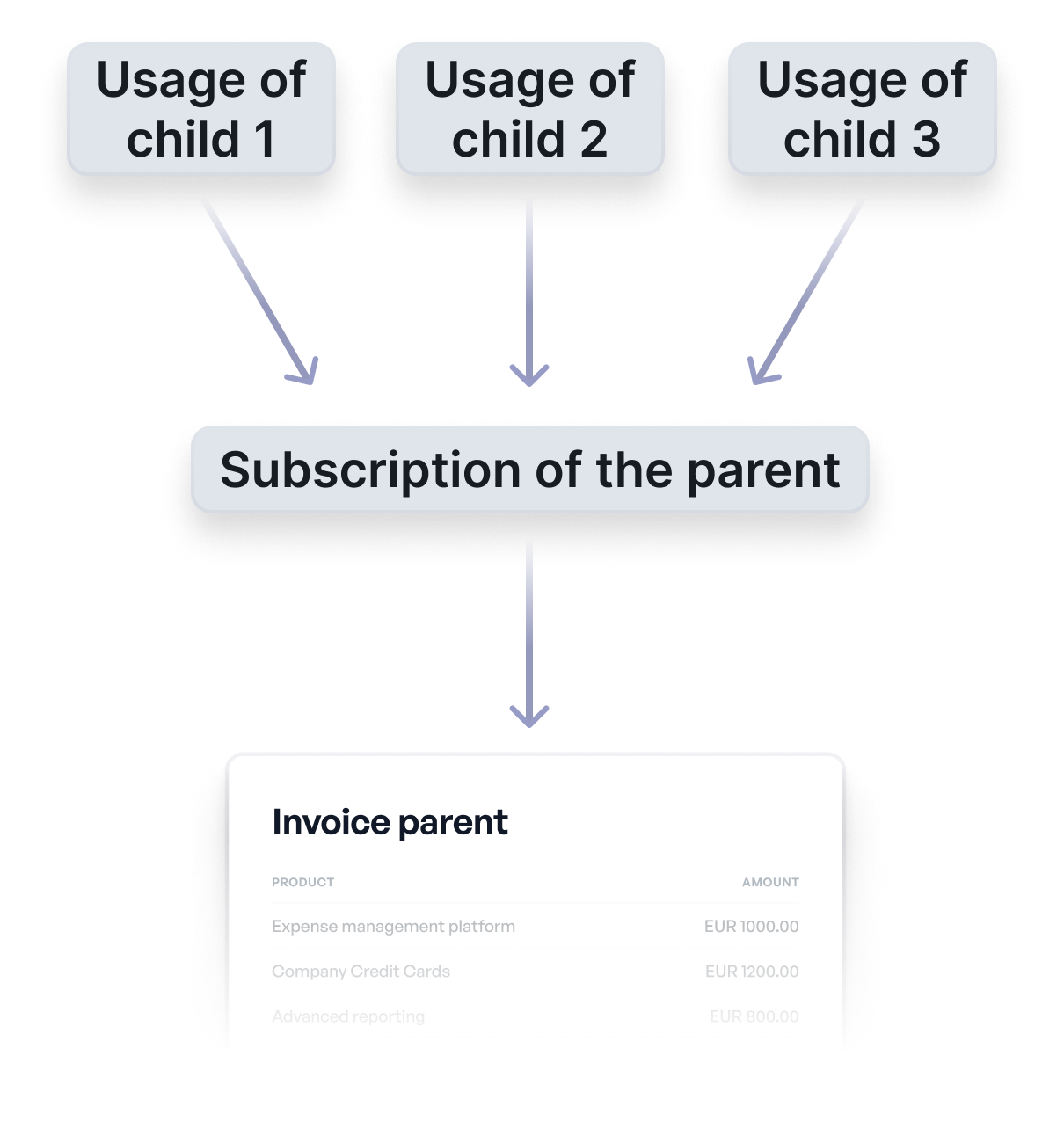
Invoicing in default billing
In the default parent-child billing setup, if child customers are linked to a parent customer, and a subscription is established on the parent, events submitted for the child customers are automatically duplicated to their parent. Consequently, events submitted for the child customers are processed for both the child and its parent.
This configuration allows the submission of events for the child customers under the subscription on the parent, facilitating seamless processing as if they were each submitted individually

Tag a parent customer while creating a child customer in the customer creation form
Updated 10 months ago