
Flat and fixed pricing
The most commonly used basic pricing structure of usage-based contracts
Flat pricing
The most standardised and straightforward pricing structure of usage-based pricing is flat pricing.
Flat fee is a fixed fee per unit, for e.g, a flat fee of $50,- is per unit so for 50 units it would result in $2500,-.
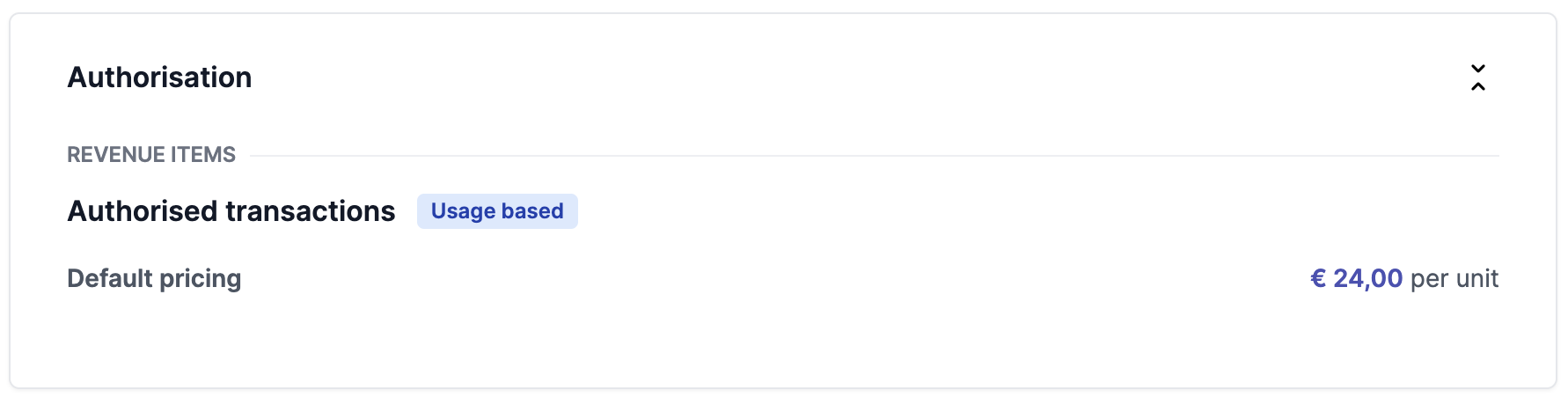
For example, if the product usage metric is sum of authorised transactions and they are charged as €24,00 per transaction, the pricing will look like this:
Fixed or recurring fees
A fixed fee is for recurring charges. You can charge a fixed amount per billing cycle, set to either billed in advance or not.

Block pricing
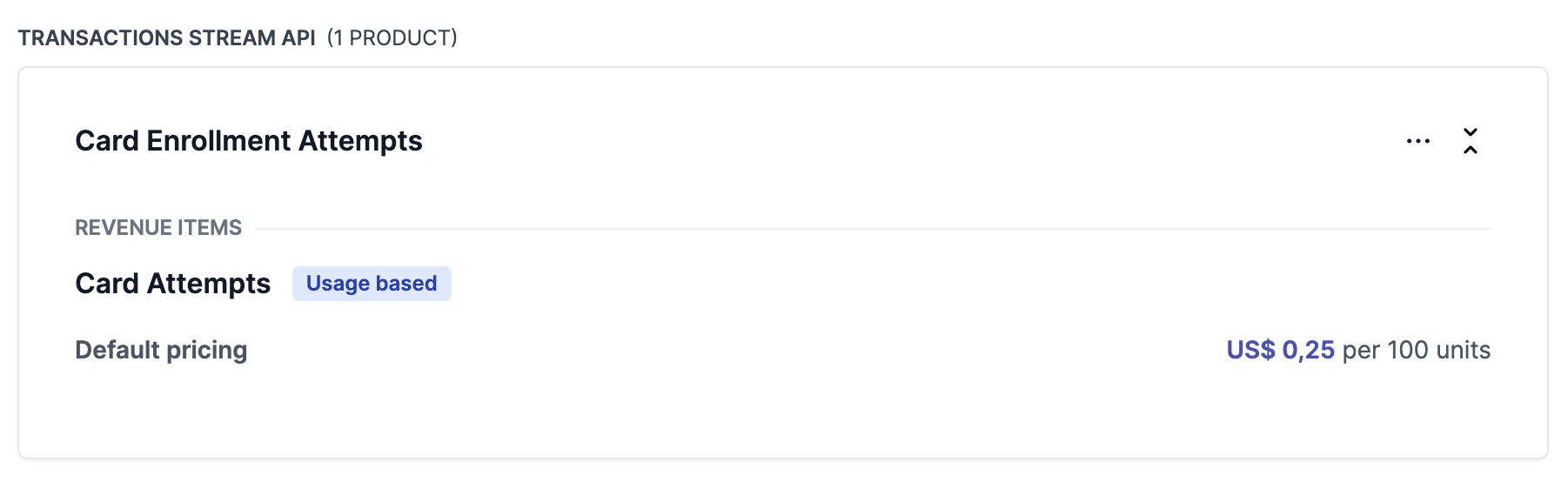
It's also possible to offer flat pricing per blocks of multiple units. Say, the usage metric is the sum of card attempts, but the pricing is $0,25 per 100 card attempts, you can create a block of units with a block size of 100:
Floor and cap fees
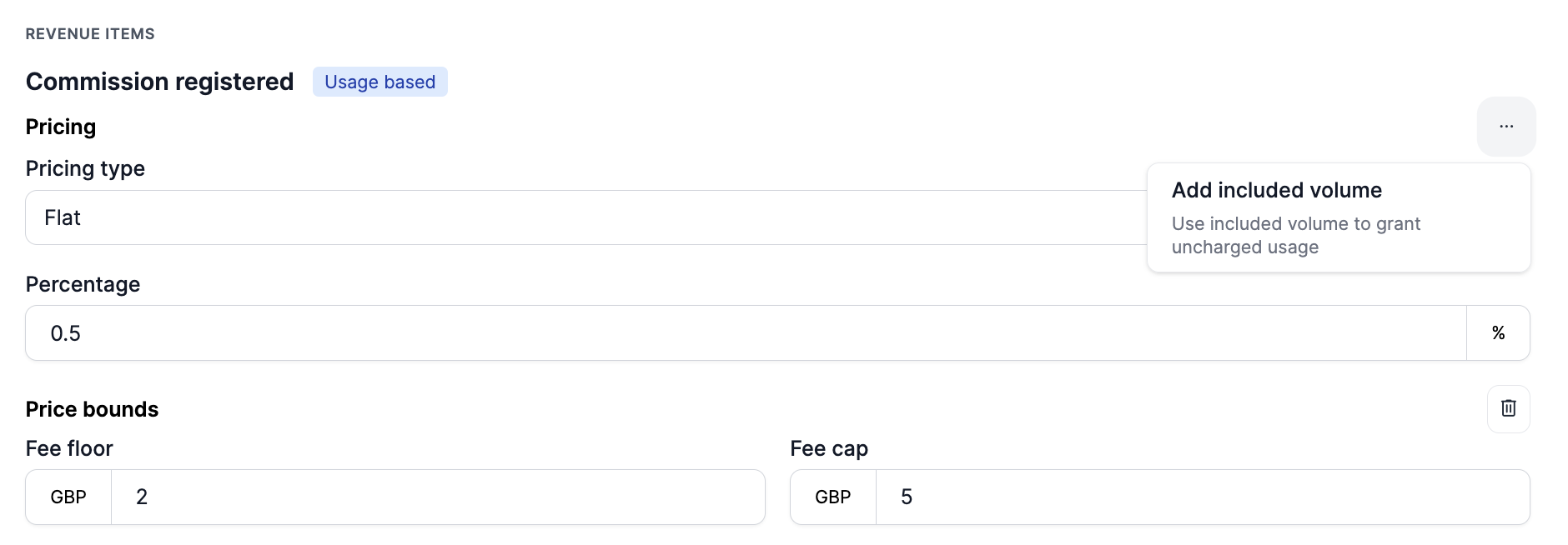
When using percentage-based pricing, you might want to price your customers with a minimum and/or a maximum amount, also called 'caps' and 'floors'.
The option is automatically shown when configuring pricing for product items that have an Amount meter value type. It means that for each unique ingested event, the percentage price is applied, but with a minimum and/or maximum value.
So if the calculation of the event does not fall within the boundaries that have been set, the floor or cap fee will apply. These invoice lines are also shown separately on the invoice details.
Not billed pricing
If you do not want to charge your customer for a revenue item, the 'Not billed' option can be selected. This will result that the item will not be charged, and will not be displayed on the invoice.

This can be useful in case, for example, an item has a default price, but for a certain customer this is not applicable. The price can than be overwritten with 'Not billed'.
Not billed vs 0 EUR
If a revenue item is for free/ should not be billed, but should be visible on the invoice, a Flat pricing of 0 should be set. This will indicate that the item is invoiced, but is free.
Updated 7 months ago