For AI agents: a documentation index is available at the root level at /llms.txt and /llms-full.txt. Append /llms.txt to any URL for a page-level index, or .md for the markdown version of any page.
Logo
LoginSandbox
Platform GuidesAPI DocsSDKMCP ServerChangelog
  • Getting started
    • Introduction
    • Concepts
    • Onboarding guide
  • Use cases
    • Monetizing an AI agent
    • Pricing models for AI products
    • Configuring entitlements for AI products
  • Usage metering & events
    • Meters
    • Usage events
    • Unmatched events
    • Event reprocessing
  • Products & plans
    • Product Catalog
    • Pricing Plans
      • Usage-based pricing
        • Flat and fixed pricing
        • Progressive tiered pricing
        • Top-tiered pricing
        • Stairstep pricing
        • Pricing rules
        • Combining usage volumes
      • Recurring pricing
      • One-off pricing
      • Pricing groups
      • Add-ons
      • Seat-based pricing
      • Top up pricing
    • Features & Entitlements
  • Wallets & credits
    • Credit types & wallets
    • Credits in pricing plans
  • Customers & subscriptions
    • Customers
    • Subscriptions
    • Quotes
  • Invoicing
    • Invoices
    • Invoice corrections
    • Payment Collections
    • Tax
    • Currencies & Exchange rates
    • E-invoicing
  • Analytics & reporting
    • Insights
    • Report downloads
    • Revenue Recognition & Deferred Revenue
  • Integrations
    • CRM
    • ERP
    • Email Providers
    • Data Imports: Event File Uploads
    • Data Exports
    • Payment Service Providers
  • Settings & admin
    • Billing entities
    • Payment Options
    • User management
    • Customising invoices
    • Custom fields
    • Default platform settings
    • API key creation
    • Alert Rules
    • Workflows
  • Workflows
    • Workflow Triggers
    • Workflow Actions
    • Monitoring and Audit
    • Common Use Cases
  • For developers
    • Introduction
    • Authentication
    • Local development setup
    • API
    • Errors
    • Troubleshooting
    • Query Parameters
    • Expanding Responses
    • Idempotency
    • Timestamp formatting
    • Webhooks
    • Locale
    • MCP Server
LoginSandbox
On this page
  • Unit-based Example
  • Percentage-based example
Products & plansPricing PlansUsage-based pricing

Top-tiered pricing

Was this page helpful?
Previous

Stairstep pricing

Next
Built with

Top-tiered pricing takes the full unit count against the last tier it falls in. This means that if the customer exceeds the first tier and the total usage sums up to fall int he second tier, they will be charged the total volume times the unit price of the second tier.
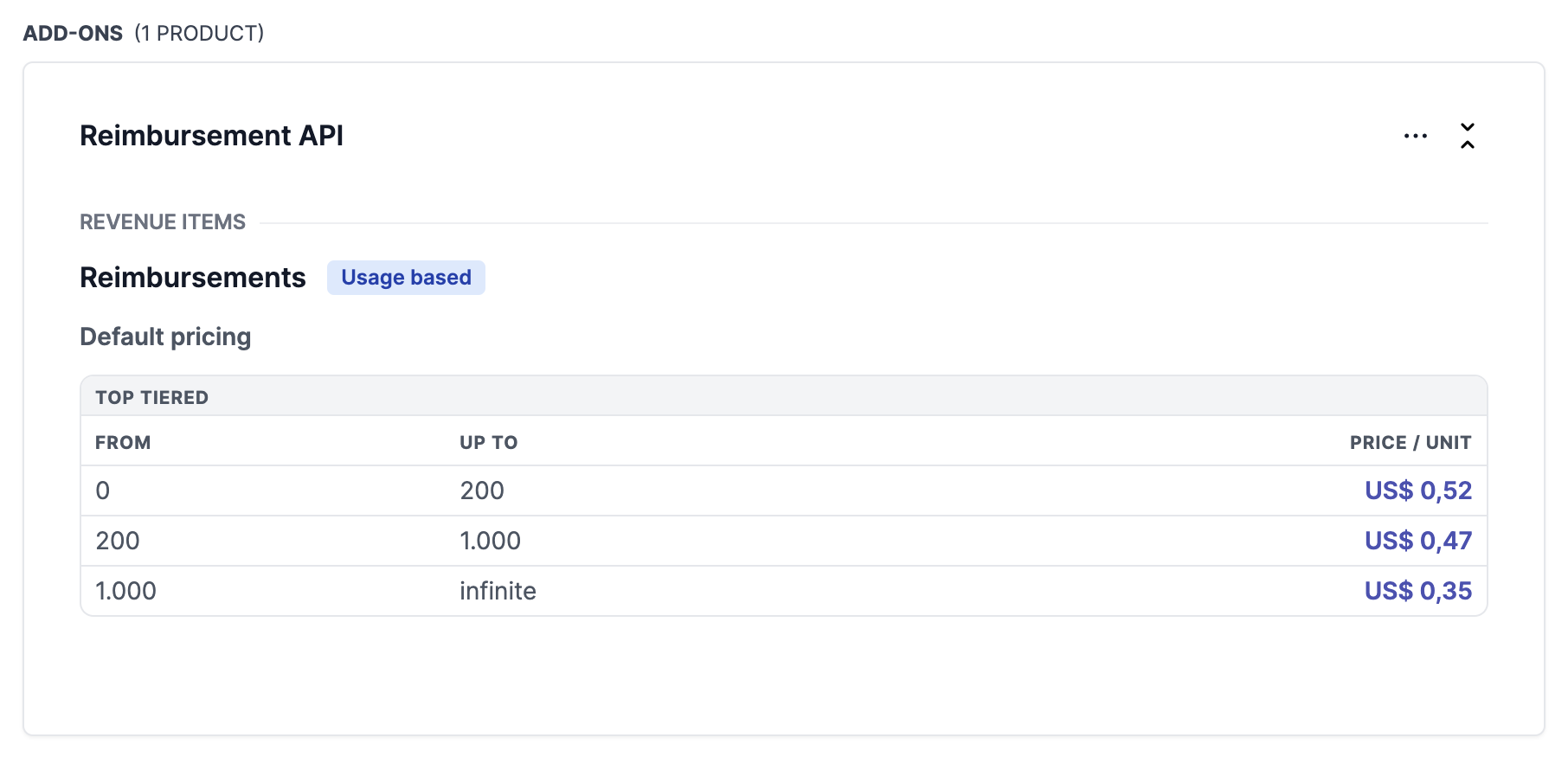


Unit-based Example

In the below example, for a total of 500 GB usage, the customer would fall into the second tier and be charged €0.08 per unit. It would mean their bill would amount to 0.08 x 500 = €40,-.

Lower boundUpper boundPrice
0≤ 100€0.10
> 100≤ 1000€0.08
> 1000∞€0.05

Percentage-based example

And now the same example but for amount-based usage metrics:

Lower boundUpper boundPrice
0.00 EUR≤ 100.00 EUR10%
> 100.00 EUR≤ 1000.00 EUR8%
> 1000.00 EUR∞5%

If a customer processed a total of €200.00 transactions in their billing period, they would be charged with a total of 8% over the entire €200 amount.

So the total invoice line would amount to €16,-.