For AI agents: a documentation index is available at the root level at /llms.txt and /llms-full.txt. Append /llms.txt to any URL for a page-level index, or .md for the markdown version of any page.
Logo
LoginSandbox
Platform GuidesAPI DocsSDKMCP ServerChangelog
  • Getting started
    • Introduction
    • Concepts
    • Onboarding guide
  • Use cases
    • Monetizing an AI agent
    • Pricing models for AI products
    • Configuring entitlements for AI products
  • Usage metering & events
    • Meters
    • Usage events
    • Unmatched events
    • Event reprocessing
  • Products & plans
    • Product Catalog
    • Pricing Plans
    • Features & Entitlements
  • Wallets & credits
    • Credit types & wallets
    • Credits in pricing plans
  • Customers & subscriptions
    • Customers
    • Subscriptions
      • Subscription lifecycle
      • Billing cycles & Pro-ration
      • Discounts, commitments, and included volume
      • Customising subscriptions & pricing
      • Subscription Groups
      • Subscription Initialisation
      • Subscription schedules
    • Quotes
  • Invoicing
    • Invoices
    • Invoice corrections
    • Payment Collections
    • Tax
    • Currencies & Exchange rates
    • E-invoicing
  • Analytics & reporting
    • Insights
    • Report downloads
    • Revenue Recognition & Deferred Revenue
  • Integrations
    • CRM
    • ERP
    • Email Providers
    • Data Imports: Event File Uploads
    • Data Exports
    • Payment Service Providers
  • Settings & admin
    • Billing entities
    • Payment Options
    • User management
    • Customising invoices
    • Custom fields
    • Default platform settings
    • API key creation
    • Alert Rules
    • Workflows
  • Workflows
    • Workflow Triggers
    • Workflow Actions
    • Monitoring and Audit
    • Common Use Cases
  • For developers
    • Introduction
    • Authentication
    • Local development setup
    • API
    • Errors
    • Troubleshooting
    • Query Parameters
    • Expanding Responses
    • Idempotency
    • Timestamp formatting
    • Webhooks
    • Locale
    • MCP Server
LoginSandbox
On this page
  • Creating a subscription schedule
  • Cloning subscription schedules with overrides
Customers & subscriptionsSubscriptions

Subscription schedules

Was this page helpful?
Previous

Quotes

Next
Built with

A subscription schedule is the period of billing or the duration for the invoice.

A subscription consist of one or multiple schedules that consist of the pricing plan version, and start and end date. There is a multitude of options to configure subscriptions and tailor them to your customers’ needs.

A subscription always has 1 or more schedules, and an optional set of:

  • Discounts
  • Commitments
  • Markups
  • Included usage volumes
  • or Seats

One can also take a pricing plan and fully customise the pricing based on the agreements you have made with your customer. Read more about pricing overrides here.
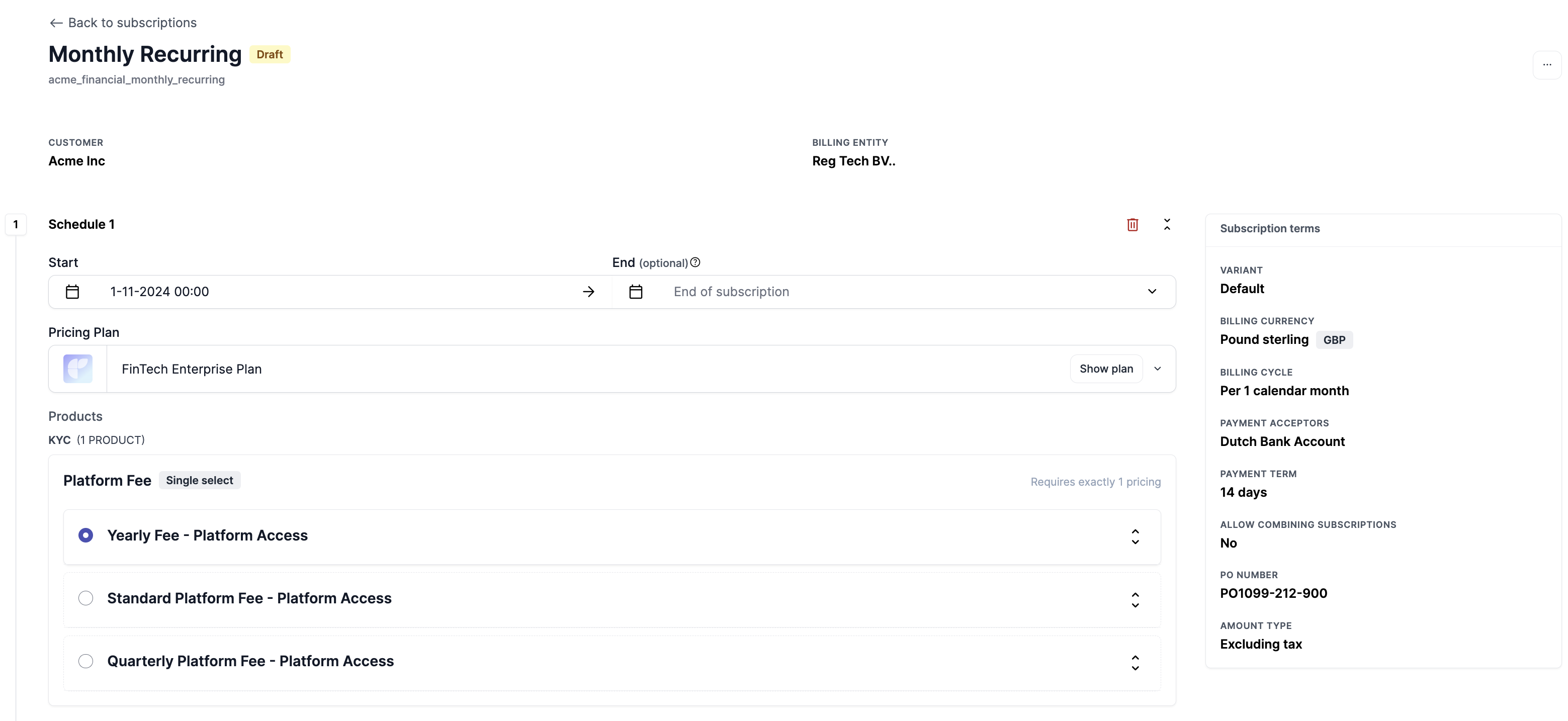


Creating a subscription schedule

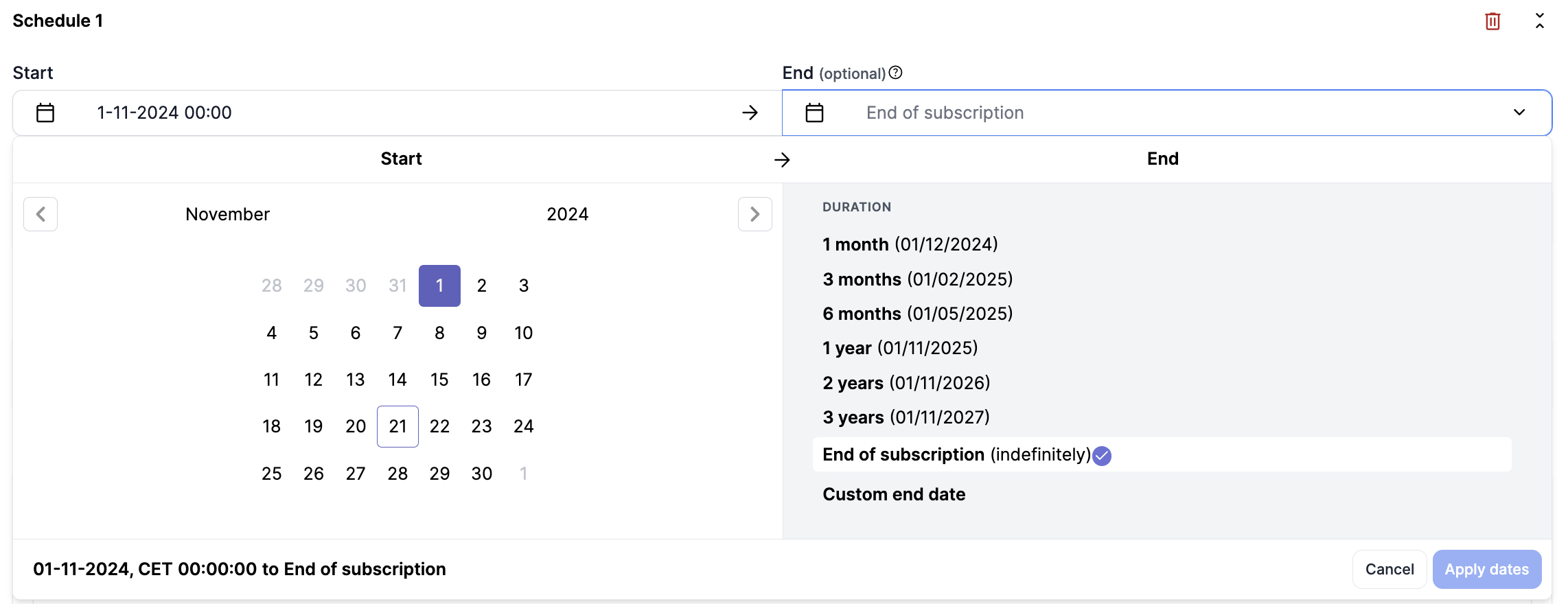
A start date is mandatory with an optional end date for the schedule which means that it renews indefinitely unless updated.

An active schedule without an end date can be updated with an end date of the future.

No two schedules can have an overlap of a gap within one subscription. The end date of one will be the beginning or start date of the next schedule. If the first schedule has no definitive end date, then the start date of the next schedule will set the end date of the previous schedule.


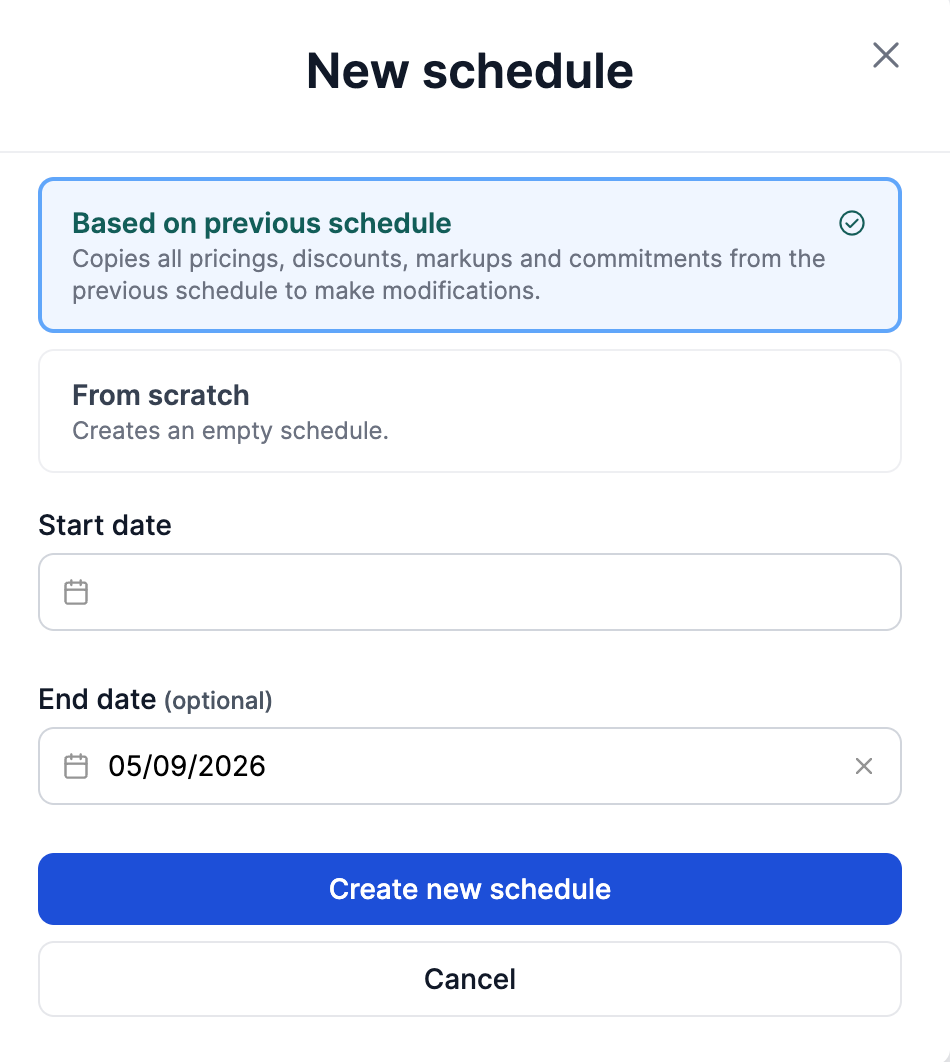
Cloning subscription schedules with overrides

While creating a new schedule in an active subscription, if you’ve got overrides on the previous subscription schedule, you can copy them over to the new schedule or choose to create one from scratch