For AI agents: a documentation index is available at the root level at /llms.txt and /llms-full.txt. Append /llms.txt to any URL for a page-level index, or .md for the markdown version of any page.
Logo
LoginSandbox
Platform GuidesAPI DocsSDKMCP ServerChangelog
  • Getting started
    • Introduction
    • Concepts
    • Onboarding guide
  • Use cases
    • Monetizing an AI agent
    • Pricing models for AI products
    • Configuring entitlements for AI products
  • Usage metering & events
    • Meters
    • Usage events
    • Unmatched events
    • Event reprocessing
  • Products & plans
    • Product Catalog
    • Pricing Plans
      • Usage-based pricing
      • Recurring pricing
      • One-off pricing
      • Pricing groups
      • Add-ons
      • Seat-based pricing
      • Top up pricing
    • Features & Entitlements
  • Wallets & credits
    • Credit types & wallets
    • Credits in pricing plans
  • Customers & subscriptions
    • Customers
    • Subscriptions
    • Quotes
  • Invoicing
    • Invoices
    • Invoice corrections
    • Payment Collections
    • Tax
    • Currencies & Exchange rates
    • E-invoicing
  • Analytics & reporting
    • Insights
    • Report downloads
    • Revenue Recognition & Deferred Revenue
  • Integrations
    • CRM
    • ERP
    • Email Providers
    • Data Imports: Event File Uploads
    • Data Exports
    • Payment Service Providers
  • Settings & admin
    • Billing entities
    • Payment Options
    • User management
    • Customising invoices
    • Custom fields
    • Default platform settings
    • API key creation
    • Alert Rules
    • Workflows
  • Workflows
    • Workflow Triggers
    • Workflow Actions
    • Monitoring and Audit
    • Common Use Cases
  • For developers
    • Introduction
    • Authentication
    • Local development setup
    • API
    • Errors
    • Troubleshooting
    • Query Parameters
    • Expanding Responses
    • Idempotency
    • Timestamp formatting
    • Webhooks
    • Locale
    • MCP Server
LoginSandbox
On this page
  • Example: three different levels of platform fees
  • Creating a pricing group
  • Pricing group add-ons
  • Customizing pricing groups
Products & plansPricing Plans

Pricing groups

Was this page helpful?
Previous

Add-ons

Next
Built with

Pricing groups enable you to create multiple options within one pricing selection, enabling many more combinations and improving the user experience of your team.

It is possible to combine more options within a pricing plan itself, thus needing less unique pricing plan templates.

An example use case is a Platform fee that can be billed in different frequencies, or multiple types of platform fees while the usage pricing is the same.
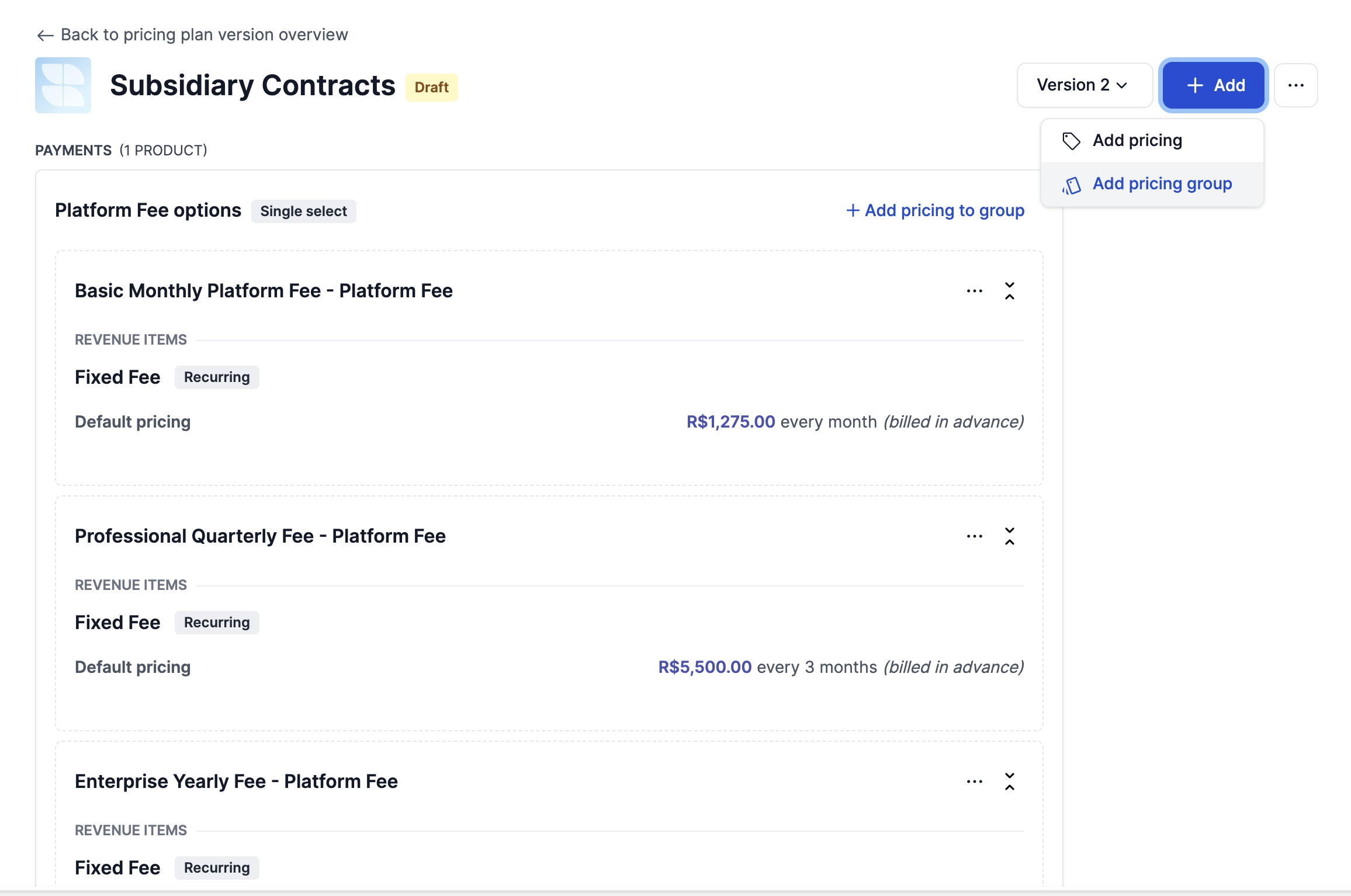

Example: three different levels of platform fees


Creating a pricing group

A pricing group has a a few parameters that define it’s characteristics. There is a Group type that can be either Default or Add-on and Group options that can be either Single select or Multi select.

The single select option means that there can only be one choice. In case of the ‘Default’ pricing type, the user must choose one pricing to be applied within a subscription.

When the pricing group is configured to be multi select, it will allow the user to select one or multiple pricings. Additionally, if the group is an add-on, the user does not have to choose a pricing at all.
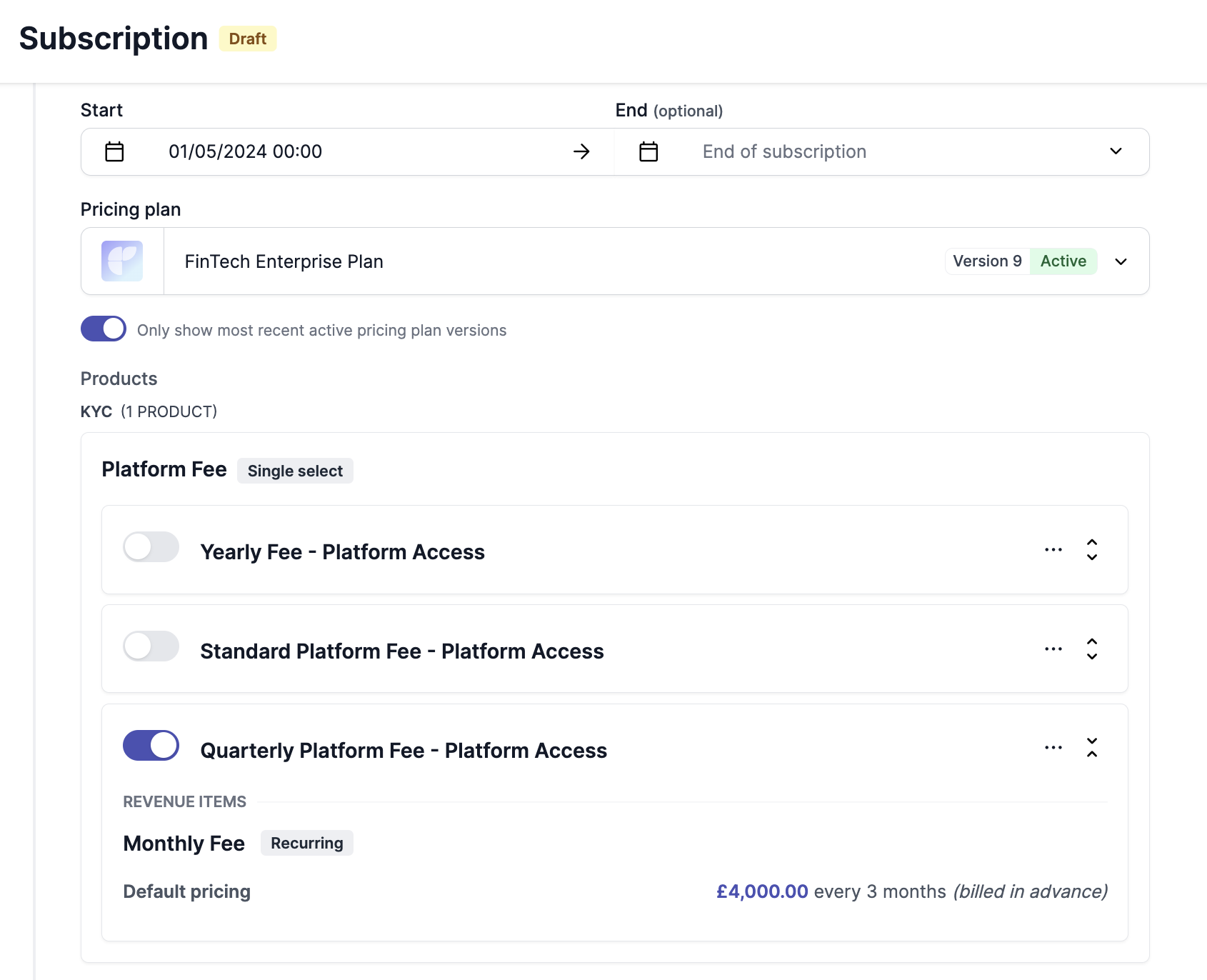

Single select pricing group Single select pricing group


Pricing group add-ons

Solvimon also allows you to configure pricing groups as an add-on. With this setting activated, the person configuring the subscription can either select:
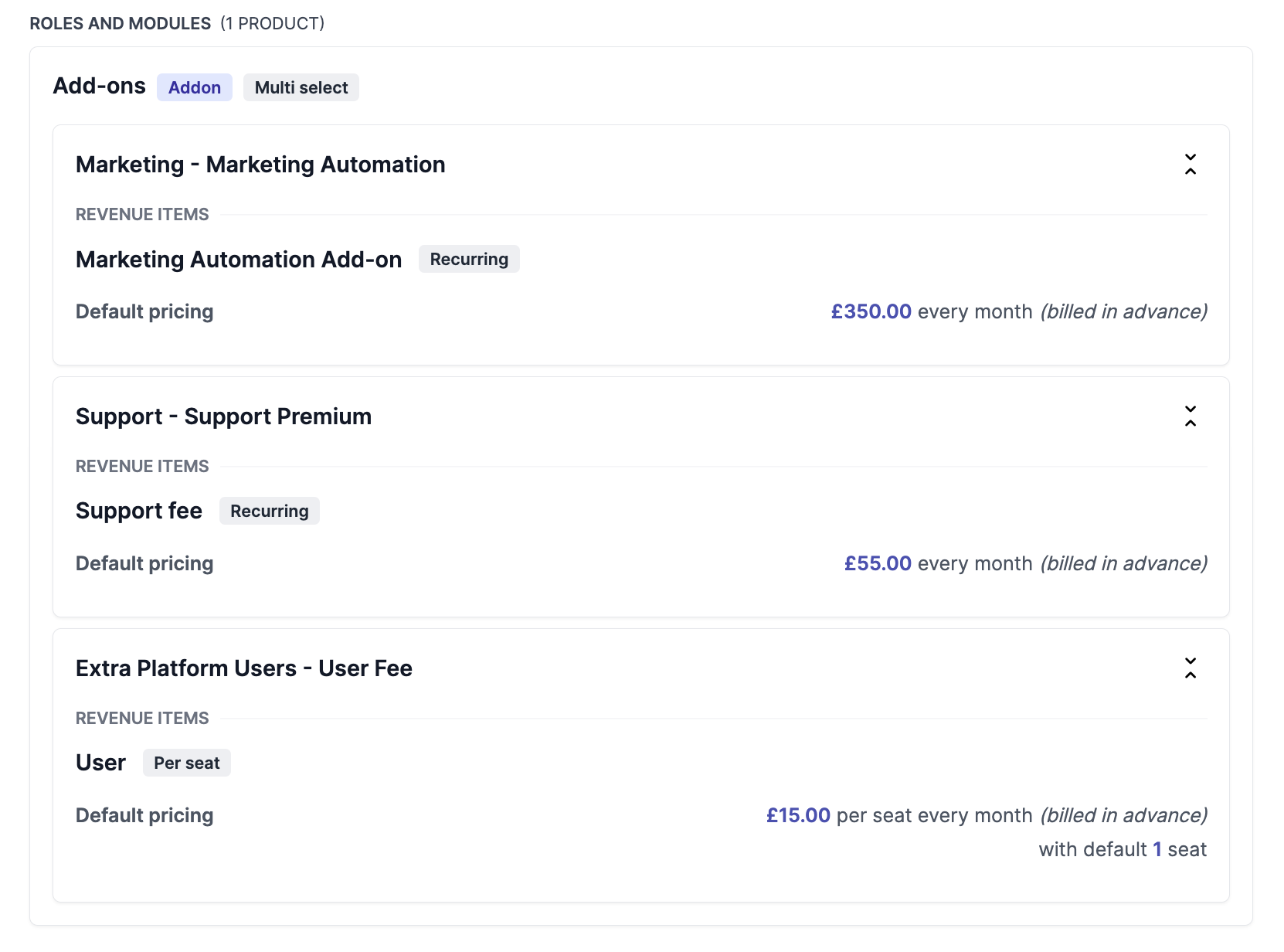
  • none
  • one (single select)
  • or multiple (multi select) pricing from the group

Multi-select pricing group Multi-select pricing group


Customizing pricing groups

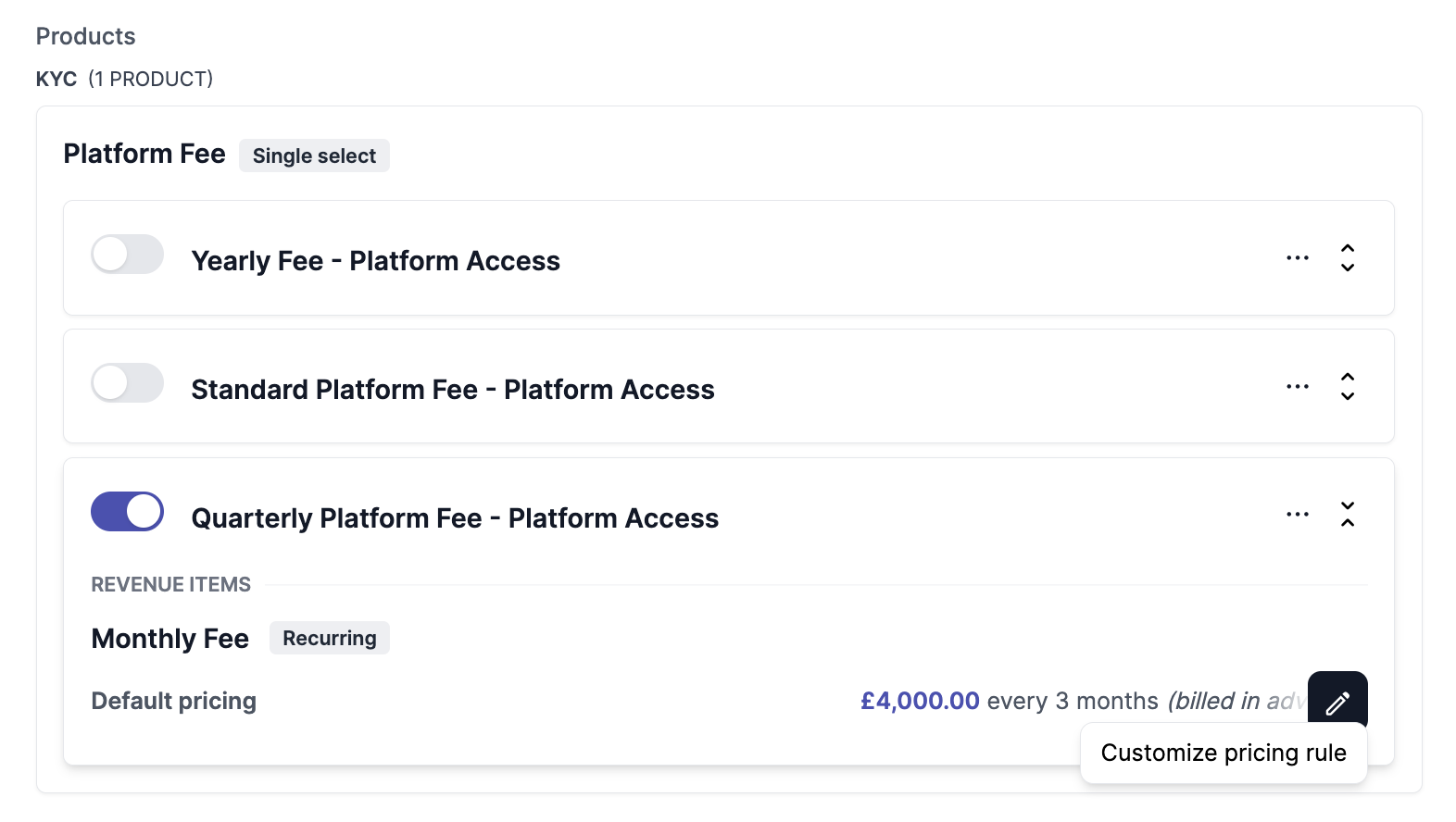
It is also possible to customize pricing for the selected pricing within a pricing group. There are no differences in the way it works compared to normal pricings.